“Learn from the crisis to be better prepared for future challenges. Every company can implement an early warning system using 10 key figures. Prof. Dr. Michael Jünger and Dr. Mathias Bauer from Blue Advisory GmbH explain what these are.
Slowly but surely, a sense of normality is returning to businesses in Bavarian Swabia. Production lines are starting up, colleagues are returning from home offices, business partners are getting back in touch, and contracts are being awarded.
To secure long-term business success, it is now crucial for medium-sized businesses to take time for reflections from the crisis: In which areas did crisis management work well? Where were we completely unprepared? And what can we improve?
Now it's about learning from the crisis and introducing an early warning system from the analyses to predict future impacts early. Those who can react proactively and promptly will have a competitive edge in the next crisis.
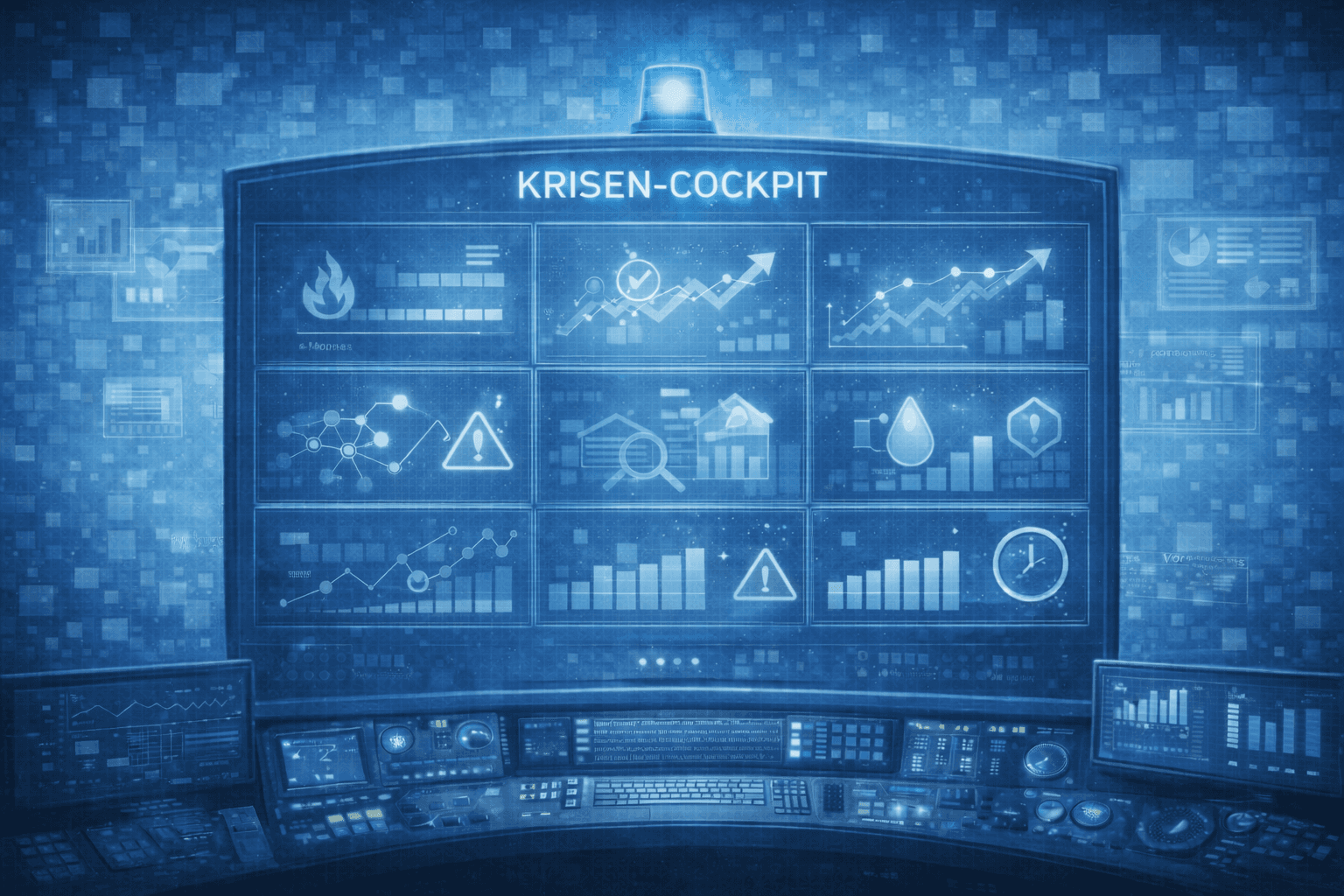
One possible tool is the so-called crisis cockpit. This consists of 10 selected metrics that enable forward-thinking corporate management as an early warning system.
On the sales side, the following metrics are crucial:
1. Cash Burn Rate (CBR)
This is the period during which a company, without further external funding, runs out of liquid assets.
2. Forecast
The projected revenue development based on the status and revenue distribution from existing contracts as well as the likelihood of realization from sales leads, offers, and tenders.
3. Sales Velocity
This illustrates how long sales opportunities remain in the pipeline before realization or how many orders are generated within a timeframe. If this metric “slows down,” it impacts future revenues, growth, and liquidity.
4. Order Risks
Where are the risks of losing or interrupting existing orders, even though an order confirmation exists?
5. Planned Profitability
This metric measures efficiency, reflecting the relationship between achieved success and the effort required. As an early warning indicator, this metric represents an important trendline.
The metrics on the sales side are complemented by those in value creation.
6. Supply Chain Vulnerability
This is an ongoing assessment of the vulnerability of a company’s supply chain, helping to identify risks, their evaluation, and control early.
7. Supplier Deliverability
This metric indicates the number of orders delivered by suppliers on the desired date, relative to the total number of orders. If this metric develops negatively, it is a warning signal for procurement.
8. Liquidity
Consists of a company’s payment ability (“cash ratio”), liquidity reserve (“quick ratio”), and liquidity (“current ratio”). It enables early detection of shortfalls.
9. Working Capital
Working Capital expresses the financial strength of a company and allows conclusions about its ability to meet (short-term) liabilities. A negative trend in this metric could indicate impending financial difficulties and thus impaired capability. A ratio analysis is also possible through the so-called Working Capital Ratio (WCR).
10. Inventory Coverage
Inventory coverage is a metric that expresses the security of supply through own stocks of certain items and materials within a defined period.
Every company should now check whether all these metrics are recorded and correctly interpreted. Depending on the industry, these can have different characteristics. It is important that the “crisis cockpit” becomes part of the regular management in the company. Only then will you be comprehensively prepared for the next crisis.
(Source: B4B-Schwaben)